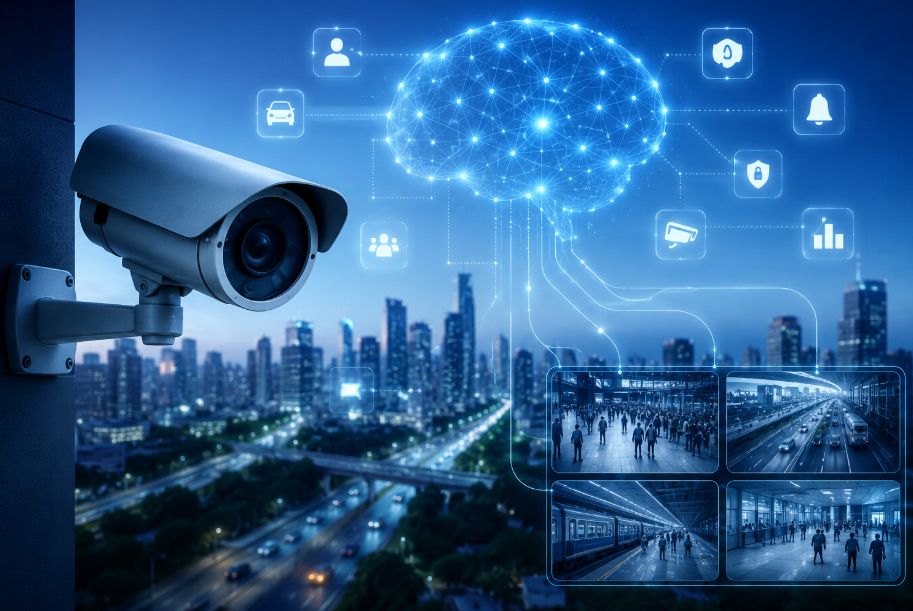
India’s surveillance industry is undergoing a profound transformation. Security cameras, once deployed primarily to record incidents, are increasingly becoming intelligent devices capable of analysing, detecting and responding to events in real time. This shift is being powered by artificial intelligence, edge computing and advanced video analytics, and Aditya Infotech’s FY26 Annual Report offers a glimpse into how one of India’s largest surveillance companies is positioning itself for this next phase of growth.
The company, which owns the CP PLUS brand, says the surveillance and security industry now stands “at the convergence of technology, intelligence and national resilience.” As digital ecosystems expand and security challenges become more complex, surveillance is evolving “beyond conventional monitoring to enable safer, smarter and more connected ecosystem.”
That evolution reflects a much broader trend across India. Artificial intelligence is rapidly changing how surveillance systems are used in airports, smart cities, manufacturing plants, educational institutions, offices and residential communities. Rather than merely storing footage for later review, modern surveillance systems are beginning to identify suspicious behaviour, recognise objects, automate alerts and provide real time operational insights.
AI is moving to the edge
One of the most notable themes running through the annual report is the growing importance of edge computing. Instead of sending every video stream to a central server for processing, AI algorithms are increasingly running directly on surveillance devices.
The company says “rapid advancements in video analytics, edge computing and integrated command and control platforms are reshaping surveillance applications across government, institutions, enterprises and commercial establishments.”
This architecture reduces response times, lowers bandwidth consumption and enables faster decision making, making AI enabled surveillance suitable for large scale deployments.
Cameras are becoming AI platforms
CP PLUS is also repositioning its product portfolio beyond traditional CCTV equipment. The annual report notes that its offerings now include “AI enabled analytics platforms” alongside surveillance cameras, recording devices, storage systems and software solutions. It is also expanding into new product lines such as Nexivue and the CP PLUS Pro Series to address different customer segments.
The strategy suggests that future growth may increasingly come from software, analytics and intelligent services rather than hardware sales alone.
AI needs stronger technology foundations
Artificial intelligence is also influencing how surveillance products are built.
According to the annual report, Aditya Infotech is strengthening backward integration while making sustained investments in research and innovation, expanding engineering talent and deepening collaboration with semiconductor and critical component manufacturers.
“Our long term technology roadmap remains supported by sustained investments in research and innovation, expansion of engineering talent and deeper collaboration with semiconductor and critical component manufacturers,” the company says. It adds that these initiatives are helping it deliver “advanced, future ready and cyber secured surveillance solutions tailored to evolving market requirements.”
These investments underline how AI is becoming as much about computing power and chip technology as it is about software.
Cybersecurity becomes equally important
As surveillance systems become more intelligent and connected, cybersecurity is emerging as another critical differentiator.
The company highlights its portfolio of “trusted cyber secured solutions” alongside domestic manufacturing capabilities, engineering expertise and strategic technology alliances. Protecting surveillance infrastructure from cyber threats is becoming increasingly important as AI systems process larger volumes of sensitive visual data.
Beyond surveillance
The implications extend beyond the surveillance industry. AI enabled cameras are increasingly being used for traffic management, industrial automation, retail analytics, perimeter security, logistics monitoring and smart city applications.
The annual report indicates that the company aims to “create meaningful value through technology led solutions” while helping businesses harness “the transformative potential of advanced analytics.”
That suggests surveillance companies are gradually evolving into providers of intelligent visual computing platforms.
India’s AI surveillance opportunity
India’s growing investments in smart infrastructure, digital public services and enterprise automation are creating favourable conditions for AI based surveillance technologies. Companies that combine domestic manufacturing, AI software, semiconductor partnerships and cybersecurity capabilities are likely to be better positioned as customers demand more intelligent security solutions.
The CP PLUS annual report signals that the next phase of competition in India’s surveillance industry may no longer be about selling more cameras. Instead, it could be about who delivers the smartest intelligence from those cameras.
More On India’s Surveillance Industry
AI in India’s surveillance industry: Key takeaways
What is changing in India’s surveillance industry?
India’s surveillance industry is shifting from traditional CCTV recording to AI powered intelligent surveillance. Modern cameras can analyse video, detect unusual activity, recognise objects and generate real time alerts instead of simply storing footage.
How is AI transforming surveillance cameras?
- Real time video analytics
- Object and facial recognition
- Behaviour detection
- Automatic threat alerts
- Traffic and crowd monitoring
- Industrial safety monitoring
What is edge AI in surveillance?
Edge AI allows artificial intelligence algorithms to run directly inside surveillance cameras or recording devices instead of sending all video to cloud servers. This reduces latency, saves bandwidth and enables faster decision making.
Why is edge computing important?
- Faster response times
- Lower network costs
- Better privacy
- Reduced cloud dependency
- Scalable deployments for smart cities and enterprises
Where is AI surveillance being used?
- Smart Cities
- Airports
- Railways
- Manufacturing plants
- Schools and universities
- Hospitals
- Retail stores
- Warehouses
- Residential societies
- Corporate offices
Why is cybersecurity becoming important?
As surveillance cameras become connected AI devices, they process sensitive visual data and connect to enterprise networks. Strong cybersecurity helps protect systems from hacking, data theft and cyber attacks.
How are surveillance companies changing?
Surveillance companies are evolving from hardware manufacturers into providers of AI software, video analytics, intelligent security platforms and visual computing solutions.
What is driving demand for AI surveillance in India?
- Smart city projects
- Digital infrastructure expansion
- Enterprise automation
- Industrial safety requirements
- Public security investments
- Growing adoption of AI technologies
What did Aditya Infotech say in its FY26 Annual Report?
The company said the surveillance industry is moving towards AI enabled analytics, edge computing and integrated command and control platforms. It is also investing in engineering talent, semiconductor partnerships, cybersecurity and research to develop future ready surveillance solutions.