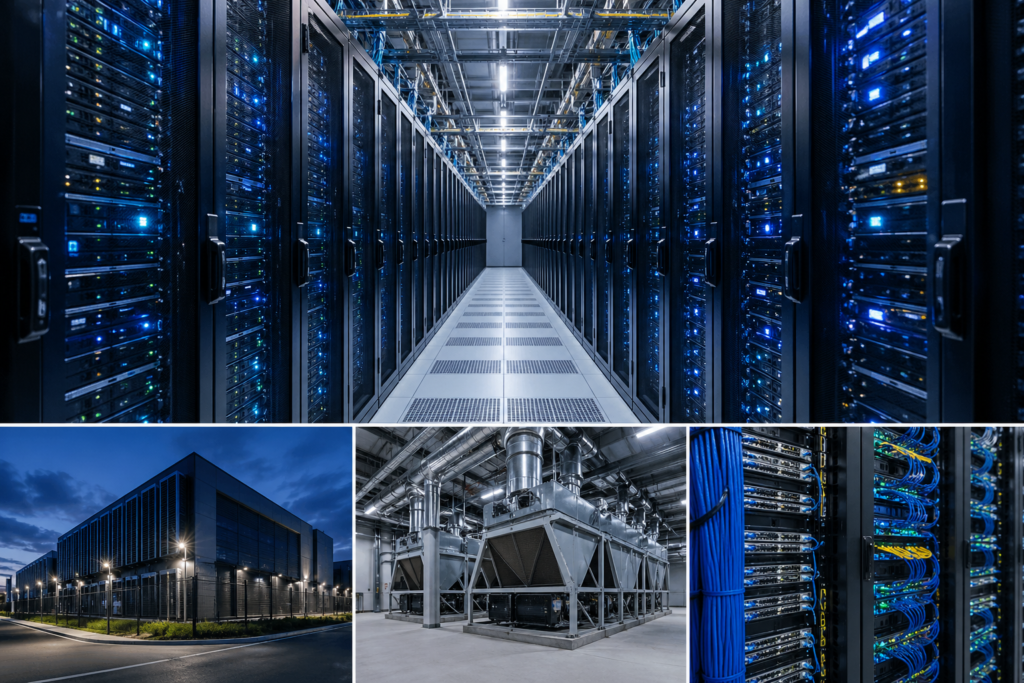
What are Data Centres?
Data centres are specialised facilities that store, process and manage large amounts of digital data. They are a core part of modern computing and the internet. Every time you stream a video, send an email, or use cloud storage, you are relying on a data centre somewhere in the world.
In simple terms
A data centre is a building or group of buildings filled with computers, also known as servers, and related equipment that work together to store and handle data.
Key components of Data Centre
Servers: They are powerful computers that store and process information.
Storage systems: These are the systems where data is kept like hard drives and SSDs.
Networking equipment: They connects everything and enables internet access.
Cooling systems: They prevent overheating as data centres generate a lot of heat.
Power supply & backup: It ensures constant operation often with generators and batteries.
What data centres do
Data centres support websites and apps, cloud computing (like Amazon Web Services, Microsoft Azure and Google Cloud), online banking and transactions, social media platforms, artificial intelligence and big data processing.
Types of data centres
There are various types of data centres like enterprise data centres, colocation data centres and cloud data centres. Enterprise data centres are owned by a single company for its own use. Colocation data centres are rented space for multiple businesses. On the other hand, coud data centres are run by providers offering services over the internet.
Why they matter
Without data centres, the internet as we know it wouldn’t exist. They make it possible for services to be fast, reliable and available 24/7.