Artificial intelligence is helping employees become more productive and less stressed, but it may also be contributing to a growing sense of isolation in the workplace, according to new research released by Workday.
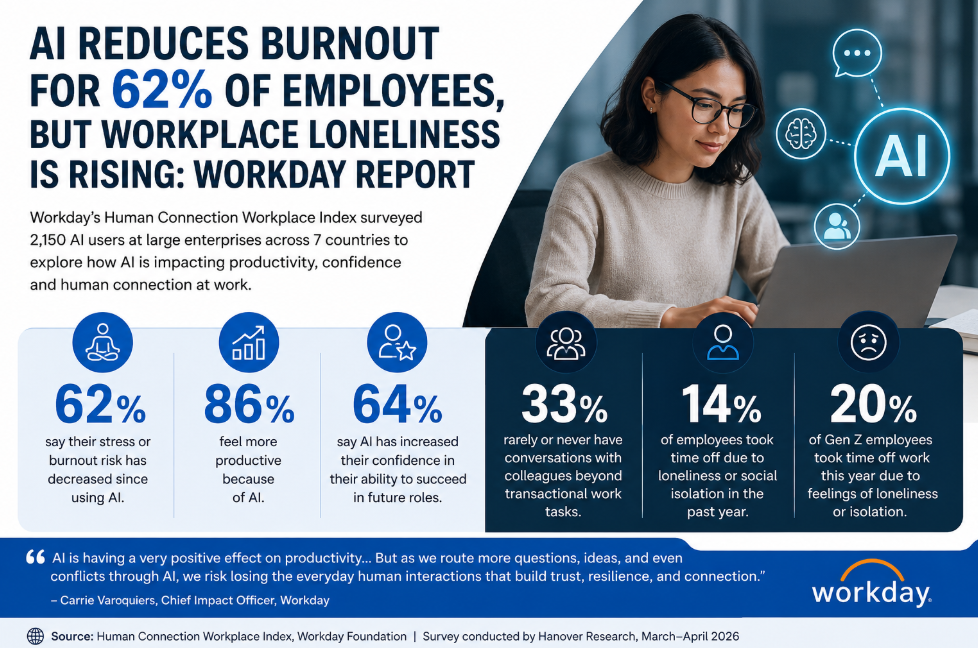
The Human Connection Workplace Index surveyed 2,150 full time employees who actively use AI at large enterprises across seven countries. The study found that 62% of workers believe AI has reduced their stress levels and risk of burnout, while 86% say the technology has made them more productive. Nearly two thirds, or 64%, reported feeling more confident about their future career success because of AI.
Many employees said AI tools allow them to spend less time on repetitive tasks and focus more on strategic and high value work.
However, the survey also highlights a potential downside of rapid AI adoption. Around 33% of respondents said they rarely or never have conversations with colleagues beyond routine work related interactions. Less than half, or 46%, said it is easy to make friends at work.
The report found that 14% of employees took time off during the past year because of loneliness or social isolation. Among Gen Z workers, the challenge appears even more pronounced, with 20% reporting that they had taken leave due to feelings of loneliness.
AI is increasingly becoming a source of support for employees. Over the past year, 76% of respondents used AI for advice, 52% for brainstorming ideas, and 37% for companionship. In addition, 16% said they have become less patient with small talk since adopting AI tools.
According to the survey, Gen Z employees are significantly more likely than older generations to feel disconnected from colleagues. More than one fifth said AI tools had negatively affected their personal relationships at work and increased feelings of loneliness.
“AI is having a very positive effect on productivity at work, and employees across industries globally are clearly telling us they feel less burned out than before they started using AI tools,” said Carrie Varoquiers, Chief Impact Officer at Workday. “But as we route more questions, ideas and even conflicts through AI, we risk losing the everyday human interactions that build trust, resilience and connection.”
The report suggests that organizations should focus on strengthening collaboration, mentorship and workplace relationships to ensure AI enhances rather than replaces meaningful human interaction.