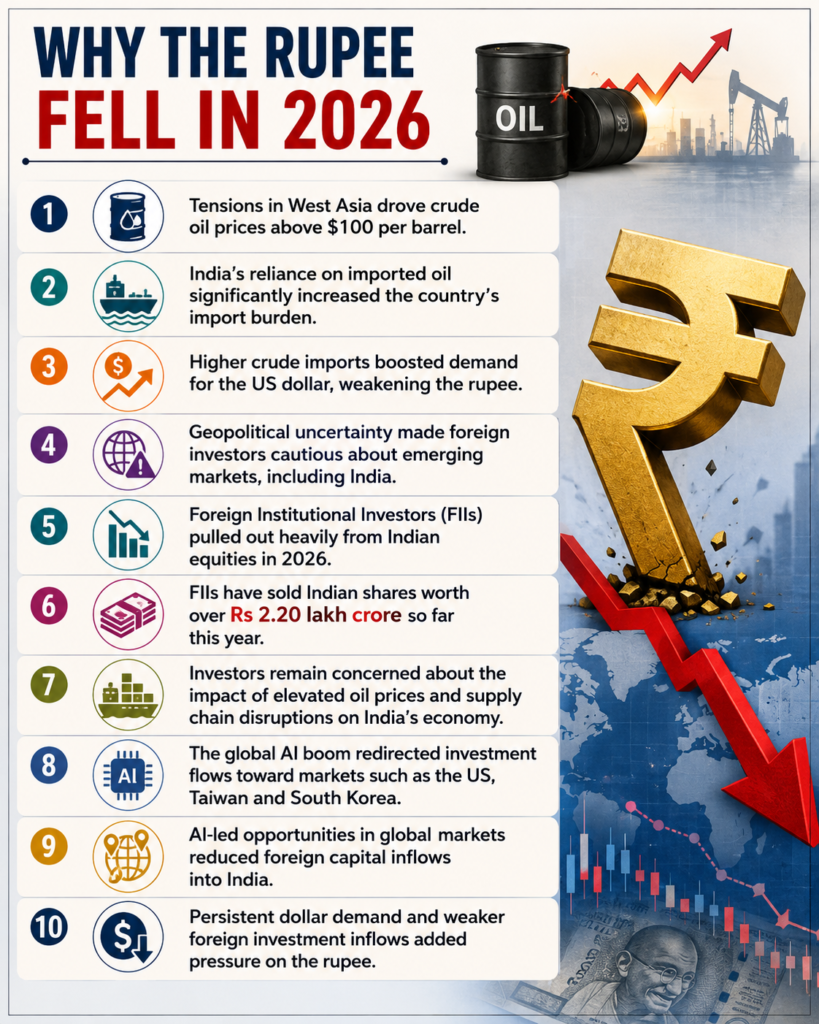
As the Indian rupee moves closer to the 100-mark against the dollar mark, concerns around inflation and economic stability are rising. Yet, for the county’s rapidly expanding Global Capability Centre (GCC) ecosystem, the weakening currency could also open new opportunities. On a year-to-date basis, the local currency has retreated 7% to 96.18-mark against dollar.
India has emerged as one of the world’s largest GCC destinations, hosting over 1,800 centres of multinational corporations across sectors such as technology, banking, healthcare, retail and manufacturing. A sharply weaker rupee could significantly alter the economics of these operations.
Cost advantage may strengthen
For most GCCs operating in India, revenues or budgets are allocated in dollars while a majority of expenses, including salaries, office rentals and operations, are incurred in rupees. As the rupee depreciates, the effective cost of running Indian operations declines in dollar terms, improving India’s competitiveness against global destinations such as Philippines, Poland and Mexico.
This advantage becomes particularly important at a time when global corporations are under pressure to optimise costs amid slowing growth and uncertain macroeconomic conditions. India’s large talent base, combined with currency driven savings, could encourage companies to shift more global functions to the country.
Expansion plans could accelerate
Over the last few years, GCCs in the country have evolved beyond traditional back office roles. Many centres now handle strategic work such as artificial intelligence, cybersecurity, cloud computing, semiconductor design and advanced analytics. A weaker rupee could further accelerate this transition as companies find it cheaper to scale technology teams in India.
Major GCC hubs such as Bengaluru, Hyderabad, Pune and Chennai may witness increased hiring and fresh investments. Industry experts believe multinational firms may also look at expanding into Tier II cities to further reduce costs while tapping into new talent pools.
Inflation could offset some gains
However, the benefits of a weaker rupee may not be entirely straightforward. A sharp depreciation could increase inflationary pressures in India, especially through rising fuel prices and higher costs of imported technology products. Employees may seek higher salaries to offset rising living expenses, gradually reducing part of the cost advantage enjoyed by GCCs.
At the same time, advanced technology infrastructure used by GCCs, including AI servers, GPUs and networking equipment, largely depends on imports. These costs could rise significantly if the rupee weakens further.
GCC momentum likely to continue
Despite these challenges, GCC’s growth in India appears structurally strong. The combination of deep talent availability, improving digital infrastructure and favourable operating economics continues to attract multinational corporations. If managed with macroeconomic stability, a weaker rupee could ultimately strengthen India’s position as a global hub for innovation, technology and enterprise capability centres.
10 key reasons behind the rupee’s decline in 2026