Maharashtra is exploring a state-focused multilingual artificial intelligence ecosystem that could make government services and citizen-facing applications more accessible through Marathi and other Indian languages.
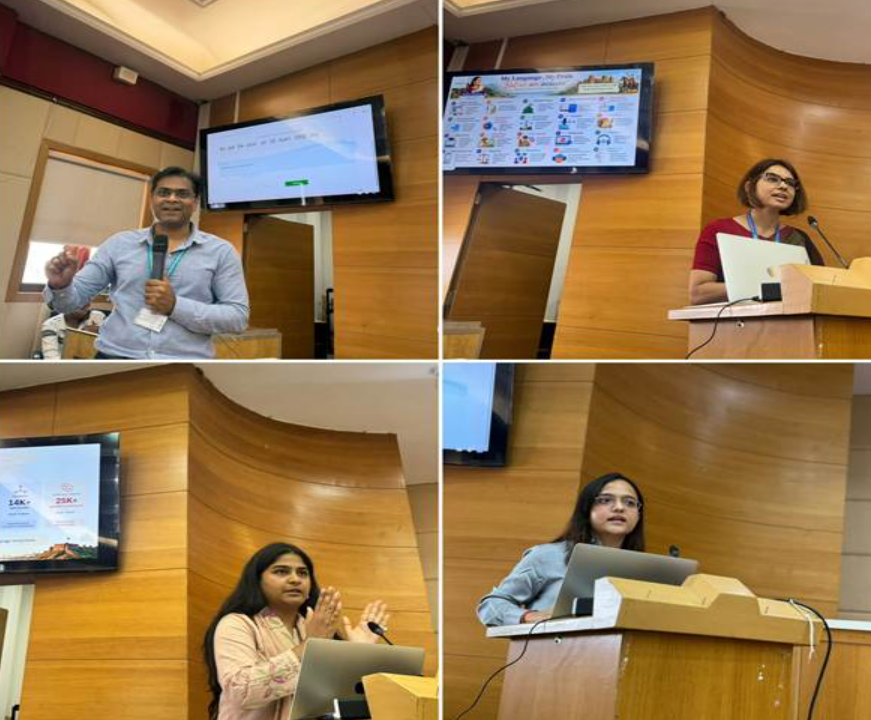
The proposed MahaBHASHINI concept emerged during a workshop organised at Maharashtra Mantralaya by the Digital India BHASHINI Division (DIBD), under Digital India Corporation (DIC), Ministry of Electronics and Information Technology (MeitY), in collaboration with the Language Department of the Government of Maharashtra.
The discussions focused on how multilingual and voice-enabled AI could be used to improve access to digital services, government information and public-facing applications in the languages citizens use in their everyday lives.
At the centre of the engagement was the broader role of Language AI in digital governance. The BHASHINI team demonstrated technologies including speech recognition, speech-to-text, text-to-speech, translation and voice-enabled interaction, showing how such capabilities could be integrated into digital public services.
The proposed Maharashtra-focused ecosystem could potentially extend these capabilities across areas such as tourism, transport and other citizen-facing services.
From translation to voice-enabled governance
The discussions indicate that the role of multilingual AI is being considered beyond simply translating government content.
Voice technologies could allow citizens to interact more naturally with digital systems, while speech recognition and text-to-speech capabilities could help make digital services more accessible to people who are more comfortable communicating in regional languages.
Another area discussed was the development of department-specific Language AI capable of handling specialised terminology used by different government departments.
Such systems could improve how AI understands government documents, information and processes, potentially enabling more effective multilingual communication across public services.
Language data emerges as a key challenge
The workshop also highlighted the importance of high-quality and representative language datasets in developing locally relevant AI systems.
For Marathi and other Indian languages, building sufficiently large and representative datasets remains important for improving the performance of language technologies across speech, translation and conversational applications.
BHASHINI’s BhashaDaan crowdsourcing initiative provides one route for citizens to contribute language data and help expand India’s language resources.
The discussions also pointed to the potential role of language experts, government institutions, academia and local communities in strengthening these datasets.
Maharashtra could develop a state-level multilingual AI ecosystem
The proposed MahaBHASHINI concept could give Maharashtra an opportunity to build a more coordinated approach to language technology across government-facing applications.
Instead of developing separate language capabilities for individual services, a common multilingual AI ecosystem could potentially support multiple departments and use cases.
Tourism could use multilingual voice interaction to assist visitors, while transport-related applications could provide information through voice or regional-language interfaces. Similar capabilities could eventually be applied across other public-facing services.
However, the workshop represents an exploration of these possibilities rather than a formal launch of MahaBHASHINI. The discussions focused on identifying priority use cases and potential areas of collaboration between the Maharashtra government and BHASHINI.
Centre-State collaboration on Language AI
The engagement brought together government officials, language experts and other stakeholders to discuss language technology, datasets, research and real-world applications of AI.
For Maharashtra, the development of stronger Marathi language capabilities could have implications beyond government websites and applications. Better speech and language models could create opportunities for a wider ecosystem of regional-language digital services.
The workshop therefore points to a broader shift in how artificial intelligence could be deployed in public services in India — moving from English-first digital interfaces towards systems capable of understanding, processing and communicating with citizens in their preferred languages.
For BHASHINI and Maharashtra, the next step will be identifying concrete use cases and translating the concept of a state-focused multilingual AI ecosystem into deployable applications.