

As artificial intelligence drives demand for computing power, data centre developers face two increasingly difficult constraints: access to electricity and water. An Oregon-based startup, Panthalassa, believes the answer could lie far from cities and industrial parks, in the middle of the ocean.
The company is developing autonomous, floating AI data centre platforms that use ocean waves to generate electricity and surrounding seawater to help cool computing equipment. The concept could offer an alternative to conventional data centres, which require large amounts of land, grid power and cooling infrastructure.
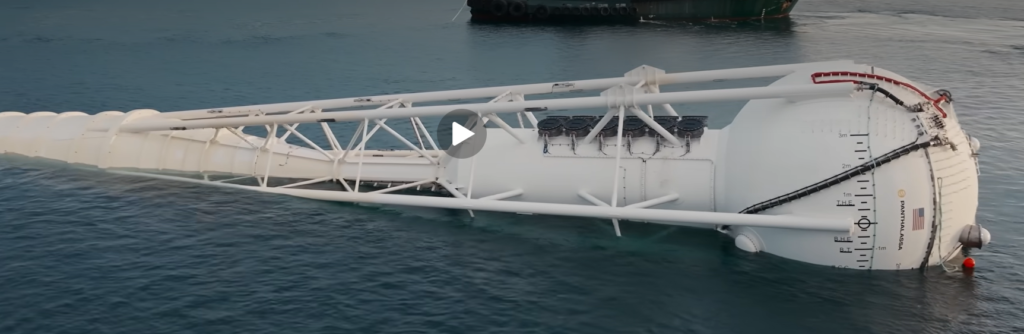
Called Ocean-3, the company’s latest platform is designed to bring power generation and computing together in a single offshore structure. Rather than building a data centre on land and connecting it to a power plant, Panthalassa wants to put both on the ocean.
How does a data centre in the ocean work?
Panthalassa’s approach converts the natural movement of ocean waves into electricity. Its floating platforms use a large steel structure that rises and falls with the movement of the sea. This motion drives water through an internal system and towards a turbine, which generates electricity. The power is then intended to run computing equipment housed within the platform.
The design also uses the surrounding seawater to manage heat generated by AI processors. This could reduce dependence on conventional cooling systems, which can consume substantial amounts of electricity and, depending on the technology used, freshwater.
The platforms are designed to operate without conventional anchors or cables connecting them to the seabed or the electricity grid. Instead of transmitting electricity to the mainland, the company plans to process data offshore and send computing results back through satellite connectivity.
In effect, Panthalassa is attempting to solve two infrastructure problems simultaneously: how to generate electricity for AI computing and how to cool the equipment without relying on large land-based facilities.
An 85-metre structure designed for the open ocean
Ocean-3 represents a significant step in the company’s development of wave-powered computing infrastructure. The platform is around 85 metres long and is designed to operate in deep ocean waters, where wave energy is more abundant. Its structure is substantially submerged, with a floating section remaining above the waterline.
Panthalassa has previously tested earlier versions of its technology, including Ocean-1 and Ocean-2. The company is now moving towards manufacturing platforms that could eventually be deployed in larger numbers.
In November 2026, Panthalassa unveiled a manufacturing facility in Vancouver, Washington, marking an important transition from building individual prototypes towards an assembly-line manufacturing approach.
According to reporting by Oregon Public Broadcasting, the facility is intended to manufacture the company’s floating nodes using steel fabrication and robotic welding technology. The company ultimately wants to develop a manufacturing model that can be replicated in other locations.
The ambition is considerable. Panthalassa wants to develop a network of autonomous platforms that can operate across the world’s oceans, generating renewable electricity and supporting AI computing workloads.
Why AI companies are looking beyond land
The growing interest in offshore data centres reflects a wider problem facing the technology industry. The expansion of generative AI, large language models and other compute-intensive applications is pushing data centre operators to secure increasingly large amounts of electricity. Finding suitable land, obtaining grid connections and arranging cooling infrastructure have become major considerations in new data centre projects.
Water is another concern. Conventional data centres can require significant quantities of water for cooling, particularly in facilities using evaporative cooling systems. This has raised questions about the competition between technology infrastructure, local communities and other water users.
Ocean-based computing could offer a different approach. It would not require the same kind of land acquisition as a conventional data centre, while seawater could provide an alternative cooling resource. Generating electricity directly from waves could also reduce dependence on fossil-fuel-based grid power.
For companies such as Panthalassa, the attraction is not simply putting servers offshore. It is creating an alternative infrastructure model in which energy generation, cooling and computing are integrated into one platform.
The challenges of taking AI infrastructure offshore
Despite its promise, the concept is far from commercially proven at scale. The open ocean is an unforgiving operating environment. Saltwater corrosion, extreme weather, powerful waves and marine growth can create maintenance challenges. Keeping sensitive computing equipment operational in such conditions over extended periods will be a major engineering test.
There are also questions about the economics of offshore computing. Building and deploying specialised marine structures could be expensive, while repairing equipment hundreds of miles from the coast may be considerably more complicated than maintaining a conventional data centre.
Connectivity is another consideration. Satellite links can transmit computing results to land, but latency and bandwidth limitations may determine which workloads are suitable for offshore processing.
The model may be better suited initially to selected AI inference and other workloads that can tolerate the additional complexity of remote computing, rather than every type of data centre operation.
Environmental considerations will also need attention. Offshore infrastructure must be assessed for its potential impact on marine ecosystems, shipping activity and ocean habitats.
Can ocean-based data centres become a new AI infrastructure model?
Panthalassa is not alone in exploring the possibility of moving computing infrastructure into the water. Microsoft’s Project Natick previously examined underwater data centres, testing sealed server systems that used the surrounding ocean for cooling. However, that research programme did not turn into a commercial data centre business.
Panthalassa’s proposition is different in one important respect. It wants the ocean to provide not just cooling but also the electricity required to operate the computing equipment.
The company’s approach reflects a broader shift in how the technology industry is thinking about AI infrastructure. As power availability, land constraints and water consumption become increasingly important, developers are exploring locations and energy sources that were previously considered impractical for large-scale computing.
For now, floating AI data centres remain an emerging technology rather than an established alternative to conventional facilities. Their commercial viability will depend on whether they can deliver reliable computing capacity, withstand harsh marine conditions and compete economically with land-based infrastructure.


