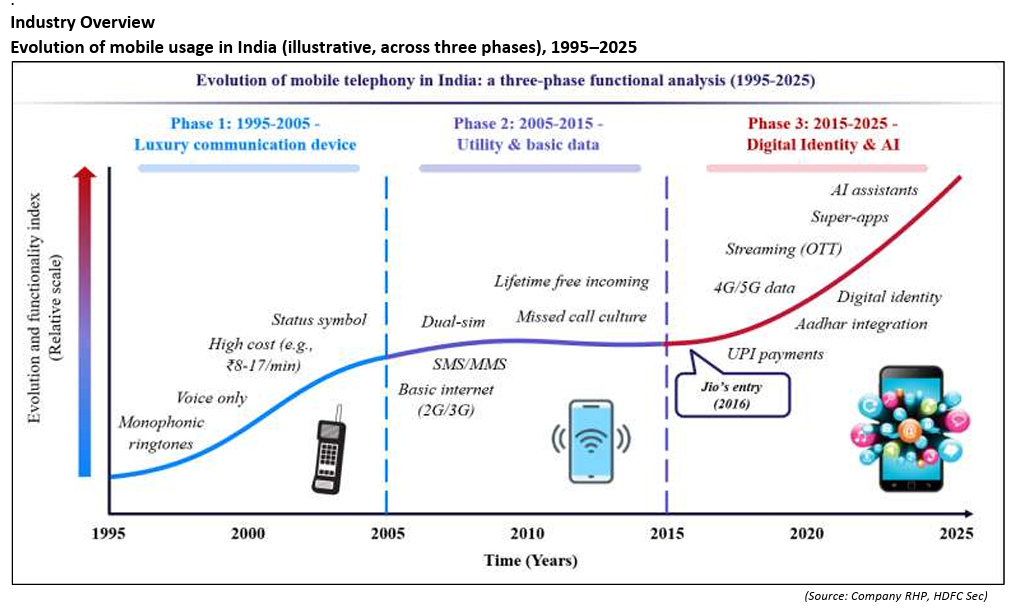
Jio Platforms’ upcoming initial public offering (IPO) puts the spotlight on a business looking to expand beyond telecom connectivity into artificial intelligence (AI), enterprise cloud and automated network management, potentially opening up new opportunities for India’s data centre industry.
The IPO is scheduled to open on October 21 and close on October 23, 2026. The price band has been set at Rs 1,065 to Rs 1,119 per share, with an employee discount of Rs 54 per share. Beyond the listing, Jio’s technology strategy highlights how telecom networks, distributed computing and AI services could increasingly shape demand for India’s digital infrastructure.
According to the IPO note published by HDFC Securities, Jio Platforms is “transitioning into an AI-native digital services company aimed at delivering connected intelligence and agentic AI services at scale to consumers and businesses”.
The infrastructure underpinning this ambition includes a distributed cloud network featuring “over 100 edge nodes”, alongside fibre-optic connectivity across more than 1,200 facilities nationwide. These assets could support applications requiring computing resources closer to users, although the report does not disclose the capacity or investment value of these edge nodes.
AI moves into network operations
At the heart of Jio’s strategy is JioBrain, its proprietary AI platform. The report says the system enables “autonomous decision-making for real-time network optimisation, dynamic capacity allocation, and predictive fault monitoring”.
Such applications illustrate how AI can be deployed within physical infrastructure, rather than solely through consumer-facing applications. As AI adoption expands, operators could require additional computing, storage and networking resources to support more sophisticated workloads.
Jio’s ambitions also extend to enterprise customers. Its portfolio includes cloud infrastructure, cybersecurity, Internet of Things solutions and enterprise AI services. The company plans to use its technology stack to expand into international markets through partnerships, managed services and selected greenfield deployments.
This strategy could broaden the range of workloads supported by India’s digital infrastructure, particularly as businesses seek integrated connectivity, cloud and AI solutions.
Rising data consumption adds to the opportunity
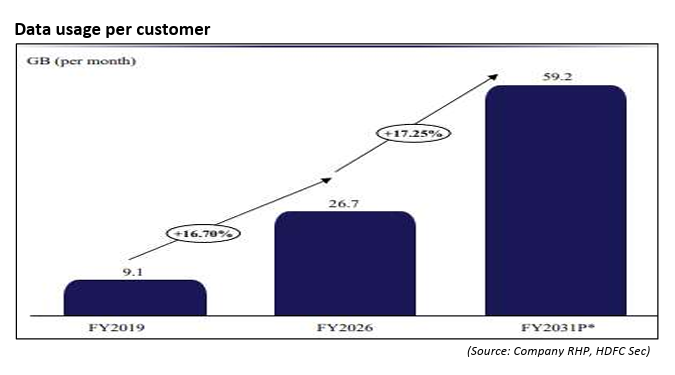
The demand outlook is also shaped by rising digital consumption. The report estimates that monthly wireless data usage per customer could increase from 26.7 GB in FY26 to 59.2 GB by FY31.
Jio served 533.3 million customers as of June 30, 2026, while its network covered more than 99% of India’s population, according to the report. Its scale provides a substantial platform for distributing digital and AI services.
However, higher data consumption does not automatically translate into an equivalent increase in data centre capacity. Actual requirements will depend on workload intensity, computing architecture, storage needs and how much processing takes place centrally or at the network edge.
For India’s data centre industry, Jio’s AI ambitions point to a broader opportunity at the intersection of telecom, cloud computing and enterprise technology. The next question is how quickly these services scale, and how much additional computing infrastructure they ultimately require.