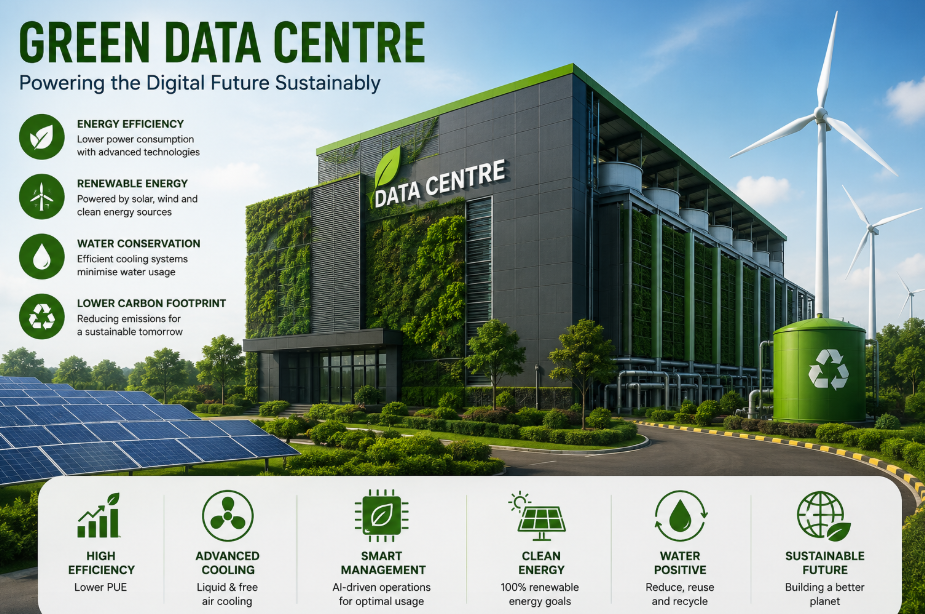
A green data centre is a facility designed to minimise its environmental impact while delivering high performance computing, cloud, artificial intelligence (AI), and digital services. It achieves this by improving energy efficiency, reducing carbon emissions, conserving water, and using renewable energy sources such as solar and wind power.
Unlike traditional data centres, which consume massive amounts of electricity and cooling resources, green data centres are built with sustainability at their core. They use advanced cooling technologies, energy efficient hardware, AI driven power management, and environmentally friendly building materials to reduce their carbon footprint.
As the world becomes increasingly dependent on AI, cloud computing, and digital services, green data centres are emerging as a key pillar of sustainable digital infrastructure.
Importance of green data centre
Data centres are among the largest consumers of electricity worldwide. According to the International Energy Agency (IEA), data centres account for around 1 to 1.5 per cent of global electricity consumption, and this figure is expected to rise rapidly as AI workloads expand.
Generative AI models require thousands of powerful GPUs that consume significantly more energy than conventional servers. As a result, technology companies are investing billions of dollars in sustainable infrastructure to support future computing needs while reducing emissions.
Green data centres help organisations in lower electricity consumption, reduce greenhouse gas emissions, cut operating costs, improve energy resilience, meet ESG and sustainability goals, comply with environmental regulations.