As artificial intelligence (AI) reshapes the global economy, a parallel race is underway to build the infrastructure that powers it. Data centres have become the backbone of the AI era, driving demand for transformers, switchgear, UPS systems, cooling equipment and power management solutions. For India, this could be a defining manufacturing opportunity.
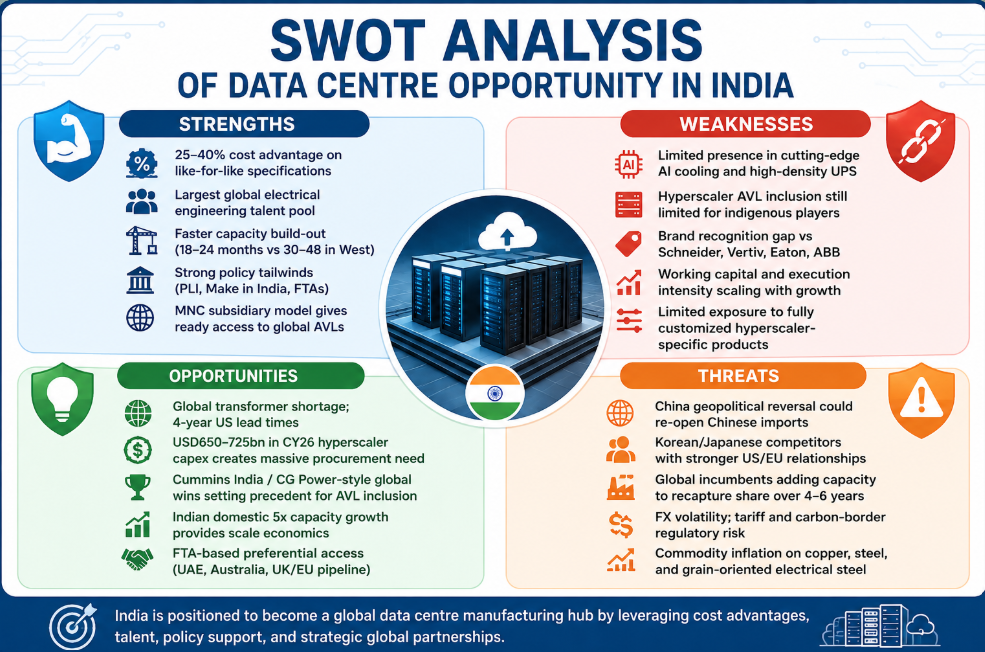
A SWOT analysis by Nomura Research suggests that the country’s electrical equipment ecosystem possesses several strengths that could help it become a preferred sourcing hub for global data centre projects. Indian manufacturers enjoy a 25-40 per cent cost advantage over global peers while benefiting from one of the world’s largest electrical engineering talent pools. Capacity expansion is also significantly faster, with projects often completed in 18 to 24 months, compared with 30 to 48 months in many Western markets.
Government initiatives such as Make in India, production linked incentives and free trade agreements are further strengthening the country’s position. Multinational subsidiaries operating in India also provide local companies easier access to global procurement networks and approved vendor lists.
The opportunities are substantial. A global transformer shortage, coupled with long lead times in the United States, is opening doors for Indian suppliers. Meanwhile, hyperscalers are expected to invest between $650 billion and $725 billion in FY26, creating a massive procurement cycle for data centre infrastructure. India’s own data centre market is projected to expand rapidly, helping manufacturers achieve scale and improve competitiveness.
However, challenges remain. Indian players still have limited exposure to advanced AI cooling technologies and high density UPS systems that are increasingly required in next generation facilities. Domestic companies also face a brand recognition gap compared with global leaders such as Schneider Electric, Vertiv, Eaton and ABB.
Threats could emerge from multiple fronts. A reversal in geopolitical dynamics could bring Chinese suppliers back into global supply chains, while Korean and Japanese competitors continue to enjoy strong relationships with Western customers. Commodity inflation, currency fluctuations and evolving trade regulations also remain key risks.
Yet the overall picture remains encouraging. If Indian manufacturers can move up the technology curve and strengthen their presence in global procurement ecosystems, the country has a realistic chance of becoming one of the world’s most important production hubs for data centre infrastructure.