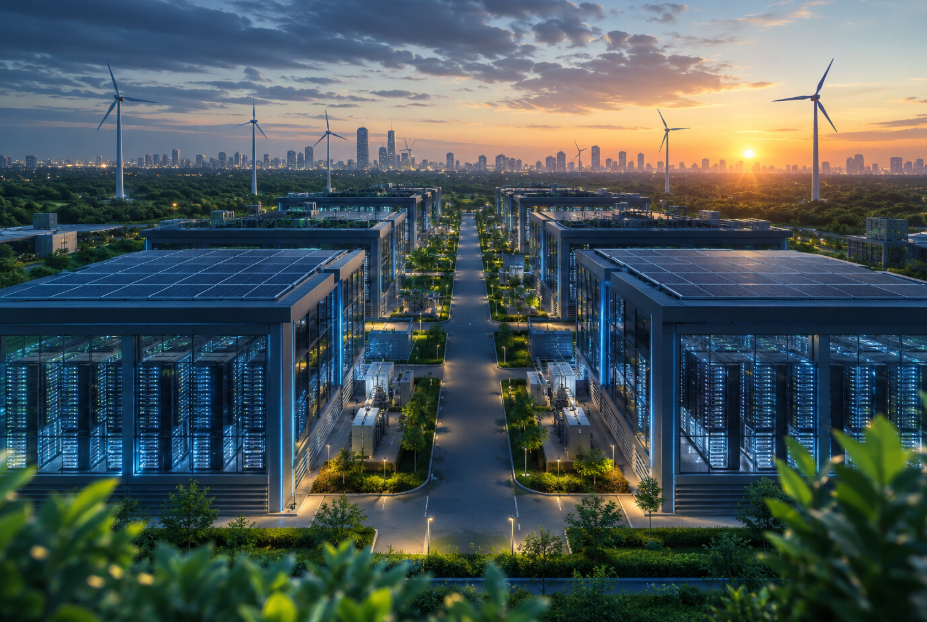
Uttar Pradesh is upping the ante in India’s data centre race, and this time AI is front and centre. The state government just released the Draft Uttar Pradesh Data Centre Policy 2026, and the ambition is clear: turn UP into a green, AI-ready digital infrastructure hub that can compete globally. It builds on the 2021 policy’s momentum, but the new draft goes further, packing in stronger incentives for AI computing, renewable energy, and high-performance computing, all while chasing some genuinely ambitious capacity and investment numbers.
The timing isn’t accidental. AI infrastructure demand is exploding right now. Large language models, cloud platforms, hyperscale data centres, enterprise AI workloads, all of it is pushing developers toward GPU-heavy facilities that need much higher power densities than before. UP has clearly read the room here, making AI infrastructure the centrepiece of its strategy rather than an afterthought.
So what exactly is the state chasing? The draft targets over 2 GW of new data centre capacity, more than Rs 2 lakh crore in investment, Tier III and Tier IV certified facilities, and at least 50% renewable energy sourcing for new centres by 2030. There’s also a push to build AI research clusters, HPC infrastructure, and incubators, all housed within dedicated data centre corridors.
That 2 GW figure deserves a second look because it’s not a modest ask. By several estimates, it actually exceeds India’s entire current operational data centre capacity. If UP hits this number, it wouldn’t just be a strong player, it could become one of the largest data centre markets anywhere in the world, capable of hosting dozens of hyperscale campuses.
Perhaps the most notable shift is how directly the incentives now tie into AI computing specifically. Data Centre Parks that install at least 700 FP64-grade AI compute units stand to get an extra Rs 10 crore added to their overall interest subsidy ceiling, plus a Rs 2 crore bump in the annual subsidy limit. Smaller Data Centre Units deploying 350 AI compute units aren’t left out either, they can claim an additional Rs 5 crore capital subsidy along with a raised annual subsidy cap.
The policy hasn’t forgotten the basics of infrastructure support either. Data Centre Parks remain eligible for 60% reimbursement on annual interest payments for seven years, within prescribed limits. Developers get land subsidies of up to 50% in Bundelkhand and Purvanchal specifically, a full stamp duty waiver on government land deals, meaningful relief on transmission and wheeling charges, and support for dual grid power setups.
Individual Data Centre Units get their own package too: a 7% capital subsidy on eligible fixed capital investment (land and buildings excluded), capped at Rs 20 crore, plus a full electricity duty exemption for ten years once operations begin.
Sustainability runs through the whole framework, not just as a checkbox. Facilities that achieve higher green building certifications or better Power Usage Effectiveness scores get additional incentives, which should nudge developers toward genuinely efficient, environmentally sound campuses rather than just meeting minimum standards.
Taken together, this draft repositions UP as something more than a colocation destination. It’s making a real play to become an AI infrastructure hub, backed by incentives specifically built around GPU deployment, renewable energy, and advanced computing ecosystems. If the state can actually deliver on these targets, it could end up standing alongside Maharashtra, Tamil Nadu, and Gujarat as one of India’s top data centre destinations, and possibly ahead of some of them.
What is the Uttar Pradesh Draft Data Centre Policy 2026?
The Uttar Pradesh Draft Data Centre Policy 2026 is a proposed state policy aimed at making Uttar Pradesh one of India’s leading AI ready and green data centre destinations. It seeks to attract over Rs 2 lakh crore of investments, add more than 2 GW of new data centre capacity and encourage AI infrastructure, renewable energy and high performance computing.
What are the major targets of the policy?
The policy aims to:
- Mobilise more than Rs 2 lakh crore in investments.
- Add over 2 GW of additional data centre capacity.
- Promote Tier III and Tier IV certified facilities.
- Encourage at least 50% renewable energy usage by new data centres by 2030.
- Develop AI research clusters and High Performance Computing infrastructure.
What incentives does the policy provide?
The draft policy proposes several incentives including:
- Interest subsidy
- Capital subsidy
- Land subsidy
- Stamp duty exemption
- Electricity duty exemption
- Transmission and wheeling charge concessions
- AI compute incentives
- Green data centre incentives
- Internet subsidy for edge data centres
How does the policy support AI?
The policy specifically promotes AI infrastructure by introducing incentives for data centres installing high performance AI compute units, including GPUs capable of FP64 processing.
Large Data Centre Parks installing at least 700 AI compute units receive higher interest subsidy ceilings, while Data Centre Units installing 350 AI compute units qualify for additional capital subsidy benefits.
Why is this policy important?
AI workloads require massive computing power, specialised GPUs and reliable power infrastructure. The policy positions Uttar Pradesh to compete for hyperscale cloud providers, AI companies and enterprise data centres by combining financial incentives with renewable energy targets and AI specific benefits.
Key Takeaways
- Investment target exceeds Rs 2 lakh crore.
- More than 2 GW of additional capacity planned.
- AI specific incentives introduced.
- Green data centres receive additional benefits.
- Renewable energy target of 50% by 2030.
- High Performance Computing ecosystem encouraged.
- Edge data centres included under policy.
- Financial and non financial incentives offered.
- Policy valid for five years after notification.
Frequently Asked Questions
Which state has introduced the Draft Data Centre Policy 2026?
Uttar Pradesh.
How much investment does the UP’s policy target?
More than Rs 2 lakh crore.
How much new capacity is planned?
Over 2 GW of additional data centre capacity.
Does the policy support AI infrastructure?
Yes. It offers dedicated incentives for AI compute units, High Performance Computing infrastructure and AI research clusters.
What renewable energy target has been proposed?
The policy encourages at least 50% renewable energy use in new data centres by 2030.
Are green data centres incentivised?
Yes. Additional incentives are proposed for certified green data centres.