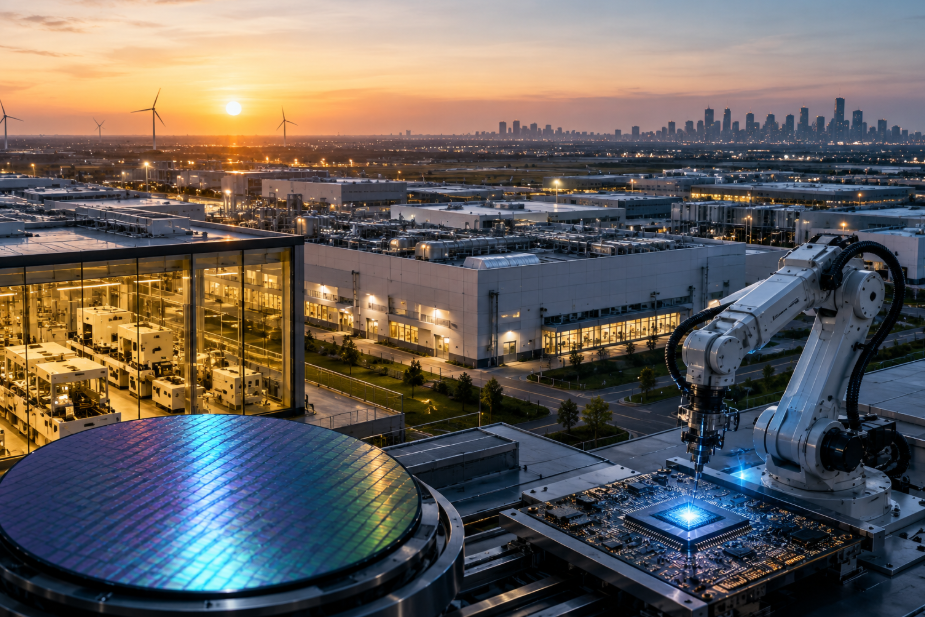
The country’s semiconductor ambitions are moving beyond policy announcements to factory execution, with Morgan Stanley saying the country’s chip ecosystem has entered a new phase as manufacturing facilities begin production and global partnerships gather pace.
The brokerage believes semiconductors are emerging as one of the strongest themes in India’s industrial capex cycle, supported by artificial intelligence, supply chain diversification and government incentives. The momentum also coincides with the rapid development of semiconductor projects at Dholera in Gujarat, which is positioning itself as India’s flagship semiconductor manufacturing cluster.
“Semiconductors are strategically important inputs across industries. India’s semiconductor journey is transitioning from policy announcements to tangible execution milestones,” Morgan Stanley said in its latest report on India’s industrial capex cycle. “Over the past six months, three facilities have started producing chips in India. Further, Tata Electronics and ASML have signed a deal, India Semiconductor Mission 2.0 has been launched, and the Union Budget has provided a strong outlay.”
The brokerage said the timing is favourable as AI infrastructure spending accelerates globally, increasing demand for advanced chips while encouraging countries to diversify semiconductor supply chains beyond traditional manufacturing centres.
“Globally, there is AI infrastructure build out, and semiconductor chips are an integral part, with greater recognition of the need for supply chain diversification amid the geopolitical backdrop,” Morgan Stanley noted. It added that the government expects India’s semiconductor market to expand from around US$25-30 billion currently to US$110 billion by 2030.
While Morgan Stanley does not specifically identify locations, Dholera is emerging as the centrepiece of India’s semiconductor manufacturing ambitions. The greenfield industrial city is home to Tata Electronics’ semiconductor fabrication project, one of the country’s most significant chip manufacturing investments, alongside a growing ecosystem of suppliers, infrastructure and logistics.
The report identifies semiconductors as one of four sectors where India’s industrial capex cycle is showing “more evidence of an uptick”, alongside data centres, green equipment and energy storage. It argues that unlike previous investment cycles, the current phase is anchored by structural policy initiatives such as the Production Linked Incentive scheme, Atmanirbhar Bharat and India Semiconductor Mission, while AI and geopolitical realignment are creating long-term demand for domestic chip manufacturing.
As AI adoption accelerates and countries seek resilient technology supply chains, Morgan Stanley believes semiconductors will become one of the defining pillars of India’s next industrial investment cycle, with manufacturing clusters such as Dholera expected to play a pivotal role in translating policy into production.