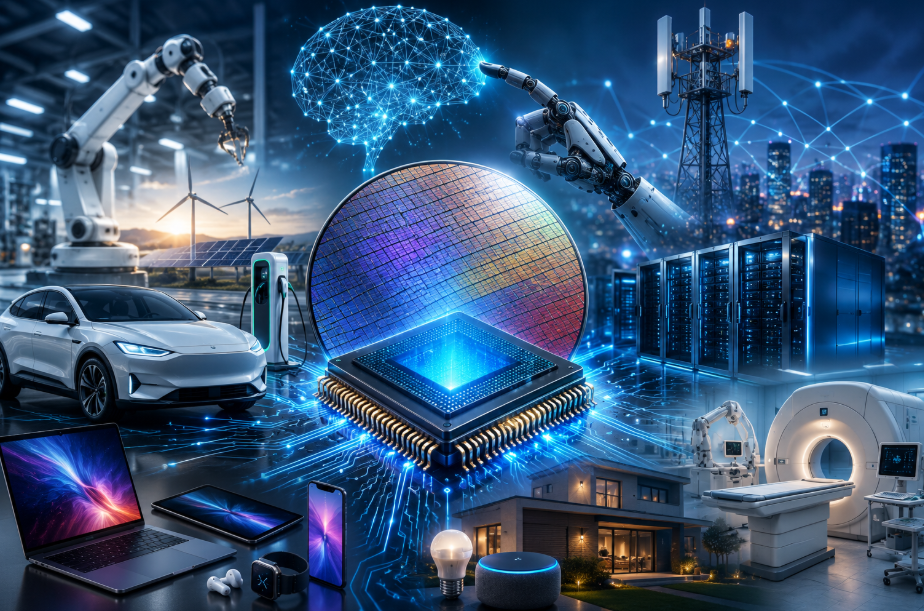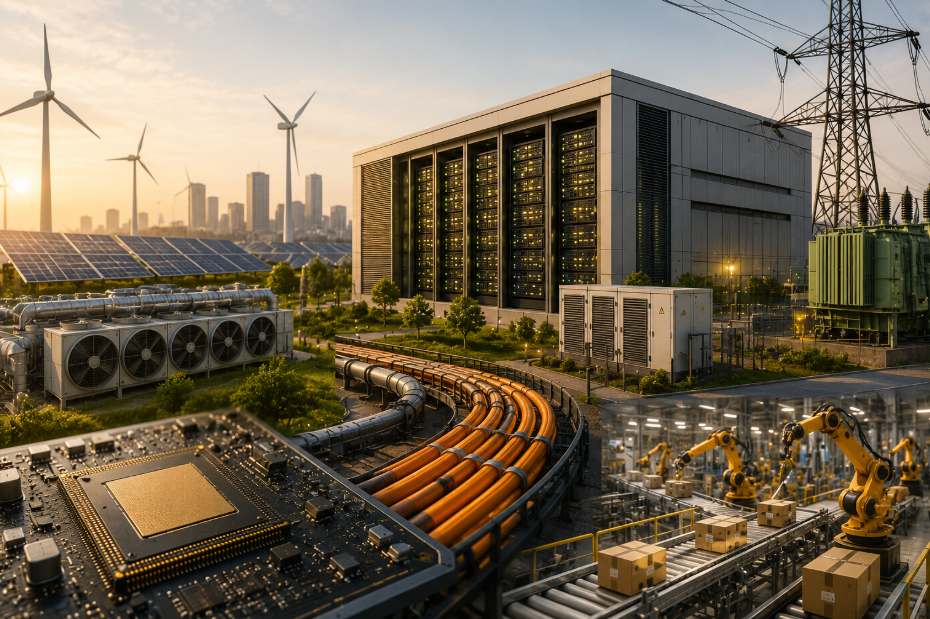
Artificial intelligence is often viewed as a software revolution powered by ever smarter algorithms. But a new report from Goldman Sachs argued that the next phase of AI will be determined not by software alone, but by the physical infrastructure that supports it. In other words, AI is rapidly becoming an infrastructure business.
The report, Gen-AI in India: Jobs Crosswinds, Productivity Tailwinds, said India’s AI ambitions will depend on “compute affordability, power availability, and the build-out of supporting digital and physical infrastructure,” drawing parallels with previous technology waves such as the internet, smartphones and the India Stack.
Unlike earlier digital revolutions, generative AI demands massive computing power. Training and deploying large AI models require specialised chips, hyperscale data centres, uninterrupted electricity, cooling systems and reliable water supplies. Goldman Sachs believes these physical assets, rather than software innovation alone, will determine how quickly AI adoption scales across India.
The investment bank warns that infrastructure remains the country’s biggest constraint. “India’s Gen-AI diffusion will depend not just on software capability, but also on compute affordability, data centre buildout, reliable power, water availability, and broader digital infrastructure,” the report said. It notes that India currently has only around 1 GW of data centre capacity, representing roughly 1% of global data centre capacity, highlighting the scale of investment required to support widespread AI deployment.
The report places AI within India’s broader digital evolution. Just as the rapid expansion of mobile internet, Aadhaar, UPI and affordable data transformed the country’s digital economy, Goldman Sachs expects AI adoption to follow a similar infrastructure-led path. Lower compute costs and stronger digital infrastructure, it argues, will be the key catalysts for mass adoption.
This shift has implications far beyond technology companies. Building AI infrastructure will require significant capital expenditure across data centres, networking equipment, power transmission, renewable energy, cooling technologies, semiconductor supply chains and digital connectivity. The AI economy, therefore, increasingly resembles a traditional infrastructure build-out rather than a purely software-led transformation.
Goldman Sachs also highlighted that the sequencing of AI adoption will matter. It argues that productivity gains are likely to be stronger if companies first deploy AI to augment workers before aggressively replacing jobs. Such an approach would allow businesses to improve efficiency while giving the broader infrastructure ecosystem time to expand.
The infrastructure story also reinforces India’s growing importance as a global AI hub. According to the report, multinational companies continue to expand their Global Capability Centres (GCCs) in India, while firms including OpenAI, Anthropic and Nvidia are increasing their presence to tap the country’s engineering talent and growing enterprise AI market. The report noted that GCC revenues have increased nearly eightfold over the past fifteen years, underscoring sustained investment in India’s technology ecosystem.
Goldman Sachs estimates that AI could increase India’s annual labour productivity growth by around 0.4 percentage points over the next decade in its baseline scenario. However, achieving those gains will require much more than advanced AI models. It will depend on whether India can build the compute capacity, energy infrastructure and digital backbone needed to power an AI-first economy.
As the report makes clear, the future of AI will not be decided only inside software labs. It will also be shaped by the data centres, power grids and digital infrastructure that enable intelligence at scale.