Tata Group is betting that the next phase of the artificial intelligence revolution will be driven not just by software but by the underlying infrastructure that powers it. In his letter to shareholders in the Tata Sons Annual Report 2025-26, Chairman N Chandrasekaran described AI as a “profound, civilizational shift” and outlined the conglomerate’s vision to build capabilities across semiconductors, data centres, enterprise software and industrial applications. The strategy marks one of the clearest indications yet that the Tata Group aims to become a full stack AI infrastructure company, supporting India’s long term technological ambitions.
Read full annual report: Tata Sons Annual Report 2025-26
Chandrasekaran said the widespread belief that AI could diminish the role of traditional software companies overlooks the complexity of enterprise AI adoption. Businesses, he noted, must first organise vast amounts of data and integrate AI into legacy IT systems built over decades. That, he argued, creates a significant opportunity for Tata Consultancy Services (TCS), which has long managed critical technology infrastructure for global enterprises. According to the report, TCS has already reached annualised AI revenue of $2.6 billion in the first quarter of FY27 and has launched its 1 GW HyperVault AI data centre platform while partnering with OpenAI, Microsoft, AWS and Anthropic. The company also expects to deploy as many AI agents as human employees over the next three years.
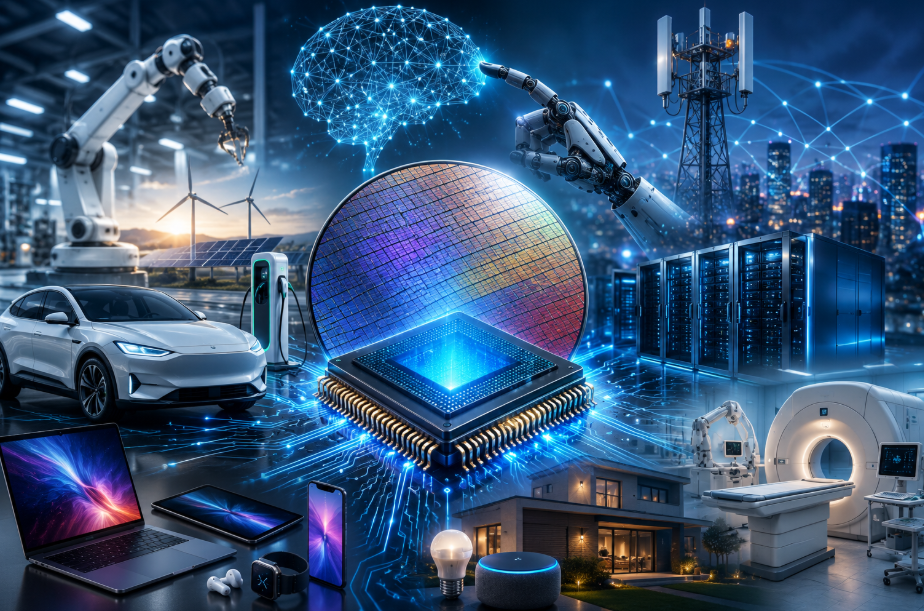
However, Tata’s ambitions extend well beyond enterprise software. “The wider opportunity for India is to bring down the cost of intelligence itself,” Chandrasekaran wrote. “Across the Group, we are working towards enabling the full stack that does this: the silicon that computes it; the data centres that host it; the enterprise systems that apply it; and the physical platforms, in energy, mobility and defence, where it meets the real world.” The chairman said these investments are aimed at building the foundational infrastructure required for India’s AI economy rather than focusing solely on AI applications.
A key pillar of that strategy is Tata Electronics, which the chairman described as being on track to become India’s first integrated player across the electronics value chain. The company is constructing India’s first high volume semiconductor fabrication plant in Gujarat, has packaged the country’s first indigenous microprocessor and plans to expand into advanced chip packaging, semiconductor materials and design capabilities. Chandrasekaran argued that semiconductors are becoming as strategically important as steel once was, calling chips “the new steel” because every AI system, automobile, aircraft, power grid and connected device depends on them. He added that building a domestic semiconductor ecosystem is essential for India’s technology sovereignty and long term economic resilience.
Looking beyond immediate financial returns, the Tata Group said its investments in semiconductors, AI infrastructure, energy transition, defence manufacturing and connectivity are designed to support India’s development through 2047, the centenary of Independence. Chandrasekaran said the technologies being built today would become the ordinary infrastructure of national life in the decades ahead, reinforcing the group’s long standing philosophy of investing in institutions that create lasting national impact.