India’s Global Capability Centre (GCC) ecosystem is entering a new phase of expansion, with speed, agility and access to specialised talent emerging as critical priorities for enterprises. As GCCs take on more strategic roles within global organisations, workplace strategy is increasingly becoming a business decision rather than simply a real estate consideration, according to the Awfis and Zinnov report on India’s GCC ecosystem and workspace evolution.
The report highlights how traditional workspace models are struggling to keep pace with the evolving requirements of GCCs. Fixed footprints, long commitments and lengthy build out cycles can limit the ability of companies to respond quickly to changing business needs.
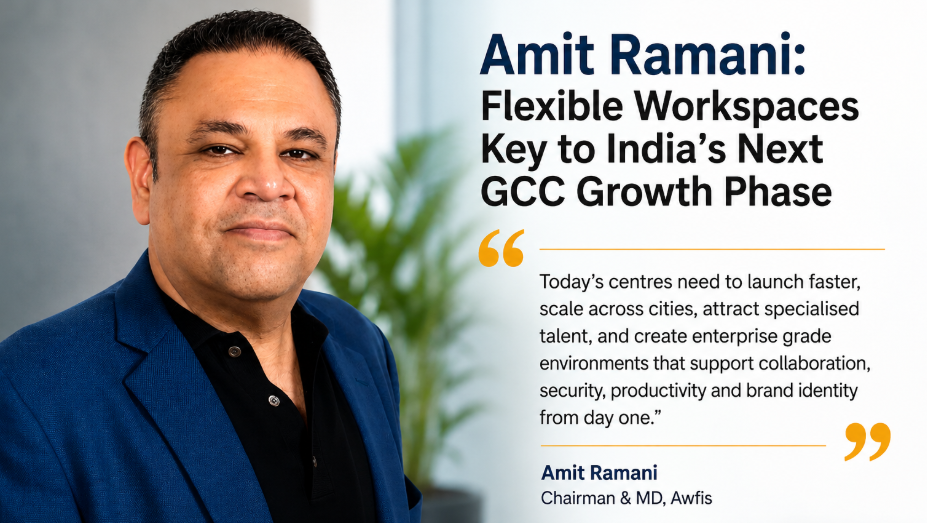
“Today’s centres need to launch faster, scale across cities, attract specialised talent, and create enterprise grade environments that support collaboration, security, productivity and brand identity from day one,” said Amit Ramani, Chairman and MD of Awfis.
According to Ramani, flexible and managed workspaces are emerging as an important solution, providing GCCs with a combination of speed, flexibility and control. Such models can enable companies to enter new markets faster, adjust workspace capacity as headcount changes and create workplaces aligned with global standards without taking on the full burden of conventional real estate commitments.
The shift is also extending beyond India’s established technology hubs, with GCC expansion increasingly reaching newer and Tier II locations. This is allowing enterprises to access wider talent pools while maintaining operational flexibility.
“At Awfis, we have seen this shift firsthand through our growing GCC client base, and we remain committed to creating workspace solutions that support innovation, productivity, and long term business growth,” Ramani said.
The report suggests that as GCCs become increasingly integrated with global business strategy, the workplace is moving upstream in decision making. The next phase of India’s GCC growth may therefore be shaped not just by where companies establish their centres, but by how quickly and effectively they can create environments that support productivity, collaboration and innovation.